
The Holy Bible
When considering the nature of God, one invariably must look to the Bible as the most comprehensive and authoritative source of divine revelation. Rather than relying on human speculation or philosophical inference alone, the Bible presents itself as God’s self-disclosure — providing a unified and reliable account of who He is, how He acts, and how He relates to humanity.
Commonly referred to as “Scripture” or the “Word of God,” the Holy Bible fulfills several essential roles. It documents history and God’s interactions with humanity, unveils His divine nature and redemptive plan for mankind, and establishes a clear guide for Christian living.
1. Record of God’s Interactions with Humanity
The Bible provides a historical account of God moving sovereignly throughout human history to intervene on behalf of mankind. Scripture presents God’s interventions not as rare or isolated events, such as Moses parting the Red Sea or Jesus healing the sick and performing miracles, but as a continuous pattern woven throughout history. From Genesis to Revelation, God is portrayed as actively sustaining creation, guiding nations and individuals, correcting humanity, rescuing the oppressed, and working to redeem mankind from sin and separation from Him.
“The eyes of the Lord are on the righteous, and his ears are attentive to their cry. He is close to the brokenhearted and saves those who are crushed in spirit.” (Psalm 34:15,18)
“O Lord, you have searched me and known me! You know when I sit down and when I rise up; you discern my thoughts from afar. You search out my path and my lying down and are acquainted with all my ways.” (Psalm 139:1-3)
“God is our refuge and strength, an ever-present help in trouble. Therefore we will not fear, though the earth give way and the mountains fall into the heart of the sea…” (Psalm 46:1-2)
2. An Insight into God’s Nature
Scripture is the primary channel through which God’s character and attributes are revealed. The biblical text portrays God as a triune being — Father, Son, and Holy Spirit, commonly referred to as the Holy Trinity. It also distinguishes between God’s incommunicable attributes — those unique to Himself (e.g., omniscience, omnipotence, omnipresence) and communicable attributes (e.g., love, justice, mercy), which can be reflected in humanity [1-3].
Jesus speaking of the Holy Trinity: “Therefore go and make disciples of all nations, baptizing them in the name of the Father and of the Son and of the Holy Spirit” (Matthew 28:19)
“For in Him all things were created: things in heaven and on earth, visible and invisible… all things have been created through Him and for Him. He is before all things, and in Him all things hold together.” (Colossians 1:16-17)
“The LORD is merciful and gracious, slow to anger and abounding in steadfast love.” (Psalm 103:8)
3. God’s Plan of Salvation

The foundational and unifying theme woven throughout the Bible is God’s plan of redemption for fallen humanity. This plan is progressively revealed in Scripture, beginning with the promise of a Redeemer in Genesis and culminating in the life, death, and resurrection of Jesus Christ [1]. Through His death on the cross, Jesus Christ bore the penalty for sin, accomplished redemption for mankind, and made reconciliation with God possible [2].
“But when the set time had fully come, God sent his Son, born of a woman, born under the law, to redeem those under the law, that we might receive adoption to sonship.” (Galatians 4:4–5)
“He Himself (Jesus) bore our sins in his body on the cross, so that we might die to sins and live for righteousness; by his wounds you have been healed.” (1 Peter 2:24)
[1,2] John Stott, J. R. W. (1986). The Cross of Christ. Downers Grove, IL: InterVarsity Press.
4. A Guide for Christian Life
Beyond its historical and theological roles, the Bible provides a moral and practical framework for Christian living. The Bible is described as a “lamp” guiding the believer’s path. Scripture provides both explicit commands — such as loving God and one’s neighbour and broader principles for relational, moral, and ethical living. Christian maturity involves internalizing these teachings (through empowerment of the Holy Spirit) so that one’s character is conformed to Christ, enabling a life that glorifies God.[1-4].
“Your word is a lamp for my feet, a light on my path.” (Psalm 119:105)
“All Scripture is… useful for teaching, rebuking, correcting and training in righteousness, so that the servant of God may be thoroughly equipped for every good work.” (2 Timothy 3:16-17)
“The law of the Lord is perfect, refreshing the soul. The statutes of the Lord are trustworthy, making wise the simple. The precepts of the Lord are right, giving joy to the heart. The commands of the Lord are radiant, giving light to the eyes.” (Psalm 19:7-8)
“I have hidden (treasured and stored) your word in my heart that I might not sin against you.” (Psalm 119:11)
Veracity (truthfulness) of the Bible
Internal and Theological Evidence
Christians and theologians widely regard the Bible as the inspired and infallible Word of God, a conviction grounded in both its internal claims and its enduring spiritual authority. [1.2]
- “All Scripture is breathed out by God…“(2 Timothy 3:16-17)
- “…no prophecy of Scripture comes from someone’s own interpretation. For no prophecy was ever produced by the will of man, but men spoke from God as they were carried along (inspired) by the Holy Spirit.” (2 Peter 1:20-21)
- Paul explains that they (the Biblical authors) impart spiritual truths in words “not taught by human wisdom but taught by the Spirit“. (1 Corinthians 2:12-13)
- Paul commends the church for accepting his message not as human word, but “as it actually is, the word of God“. (1 Thessalonians 2:13)
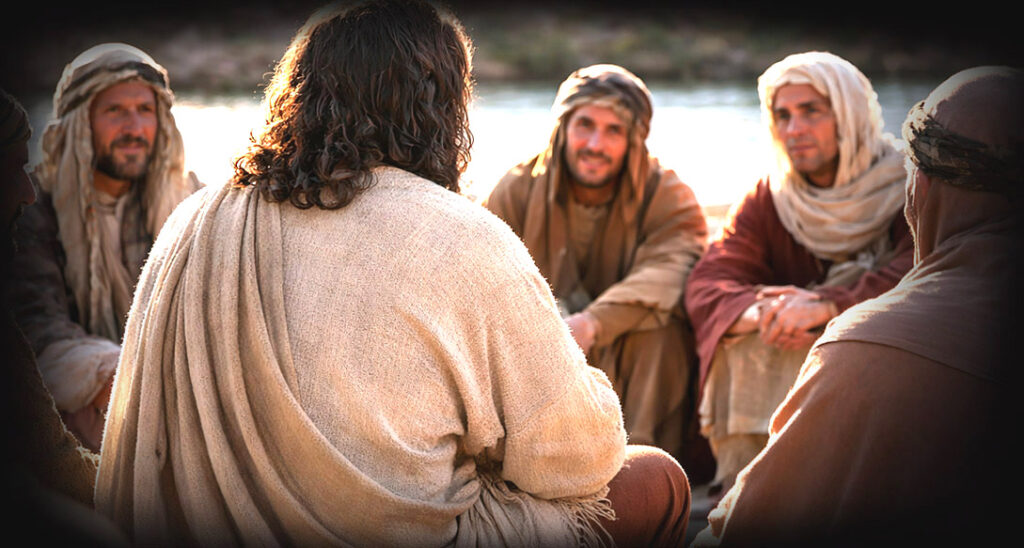
Jesus affirmed the divine authority of Scripture by frequently quoting the Old Testament as the very “Word of God”, often using expressions such as “Have you not read…?” or attributing statements directly to God with phrases like “God said…,” thereby equating the written text with God’s own voice.
Quoting Exodus 3:6, Jesus said: “…have you not read what God said to you, I am the God of Abraham, the God of Isaac, and the God of Jacob?” He is not the God of the dead but of the living.” (Matthew 22:31-32)
Jesus declared, “Do not think that I have come to abolish the Law or the Prophets; I have not come to abolish them but to fulfill them. For truly I tell you, until heaven and earth disappear, not the smallest letter, not the least stroke of a pen, will by any means disappear from the Law (Old Testament Biblical text) until everything is accomplished.” (Matthew 5:17-18)
Theologians interpret the previous passage (Matthew 5:17–18) as Jesus affirming the divine authority and enduring significance of the Hebrew Scriptures, particularly what Jews referred to as “the Law and the Prophets,” a phrase commonly used to describe the Old Testament.
By saying He (Jesus) did not come to “abolish” them but to “fulfill” them, Jesus is validating their truth and purpose. His statement that “not the smallest letter, not the least stroke of a pen” would disappear from the Law has often been understood as emphasizing the reliability and sacred authority of Scripture down to its smallest details.
External Evidence
In addition to its internal testimony, the Bible’s truthfulness is supported by converging evidence from textual criticism, archaeology, and historical analysis. Its manuscript tradition is unparalleled among ancient works, with thousands of early copies enabling scholars to reconstruct the New Testament text with a high degree of confidence [1,2].
Non-biblical writers such as Tacitus, Josephus, and Pliny the Younger independently confirm central elements of the New Testament narrative [3,4,5] while the Dead Sea Scrolls demonstrate the remarkable stability of the Old Testament text [6]. Archaeological discoveries — including the Tel Dan Inscription and the Cyrus Cylinder—also corroborate key biblical figures and events [7,8,9].
Furthermore, the Bible presents a unified message across diverse authors, and the historically grounded Gospel accounts bear features consistent with eyewitness testimony [10,11]. Taken together, these lines of evidence support the conclusion that the Bible is not merely a theological text, but a historically rooted and carefully transmitted record.

Personal and Social Transformation
The Bible’s transformative impact on individuals and societies has also been viewed as suggestive evidence of its divine origin. Across cultures and centuries, its teachings have inspired repentance, forgiveness, humility, and moral renewal, often producing profound personal change.
Its enduring influence is also reflected in its unparalleled global circulation, with an estimated five to seven billion copies printed and distributed across the globe [1]. Its reach continues to expand, now printed in its 800th unique language [2]. It also thrives in the digital age, with the leading Bible app alone downloaded on more than 700 million individual devices [3].
Furthermore, on a societal level, biblical and Christian ideas have contributed significantly to the development of legal systems, concepts of human dignity and human rights, education, and charitable institutions [4-7]. While such influence does not constitute empirical proof, proponents argue that the depth, consistency, and global scope of the Bible’s impact are difficult to explain if it were merely a human product.
Veracity of the Bible – Conclusion
Theological consensus suggests that God chose to document His communication to mankind in the Bible to preserve divine revelation in a stable, authoritative, and enduring form for all generations, safeguarding it from distortion and the limitations of oral tradition. [1] The Bible itself repeatedly portrays God commanding that His words and acts be written down as a lasting testimony for His people [2,3].
Many scholars also note that the Bible reflects the covenant pattern of the ancient world, where important agreements and promises were formally documented, thereby presenting Scripture as the enduring covenant witness of God’s relationship with humanity and His redemptive purposes fulfilled in Christ. [4]
Regarding the Bible’s inerrancy (the quality of being completely free from error, mistake, or fault), it should not be surprising for the believer that God — as the omnipotent and sovereign Creator of the universe — could ordain that the Scriptures be exactly as He intended, despite being written by many human authors across centuries. Christian theology holds that the same God who sustains the universe, governs history, and accomplishes His purposes through human events is fully capable of superintending the process of divine revelation without negating human individuality or historical context [5-9].
From this perspective, the unity, theological coherence, and redemptive continuity of the Bible across dozens of authors, cultures, and centuries is viewed not as accidental, but as evidence of divine providence and guidance.
The Attributes of God – Introduction
It is widely recognized that the study of God’s attributes constitutes a broad and extensive field of inquiry, encompassing centuries of theological reflection, philosophical analysis, and doctrinal formulation. What follows is intended only as a brief introduction.
The attributes of God describe His nature, character, and essence as revealed throughout Scripture. They help us to understand who God is and how He relates to creation. In Christian theology, these attributes are not viewed as separate parts of God, but as unified expressions of His perfect and eternal being.
Theologians classify God’s attributes into two broad categories: incommunicable attributes — those unique to God alone — and communicable attributes — those that humanity can reflect because we are created in His image. However, unlike God, who possesses these attributes perfectly, completely, and without limitation, human beings reflect them only imperfectly and in a finite measure [1,2]
Click the God’s Attributes link below for a detailed study of God’s attributes — the defining qualities and characteristics that reveal His nature and deepen our understanding of who He is and how He relates to His creation.
Alternatively, click the Drawing Near-Seeking link for a biblically based presentation of God’s plan of salvation that explains the significance of faith, repentance, grace, and redemption. The Drawing Near-Growing page offers practical and scriptural guidance for developing spiritual maturity and deepening one’s relationship with God.