
This page presents evidence which supports the existence of God by drawing on both scientific and philosophical disciplines. Areas of study explored include cosmology and physics, biological evolution, environmental studies, analytic philosophy, metaphysics, and moral philosophy.
Much of the evidence presented incorporates video to more effectively communicate the scientific and philosophical concepts discussed.

Preface
“In the beginning God created the heavens and the earth.” (Genesis 1:1)
The very first verse of the Holy Bible provides an answer to one of humanity’s most enduring questions: Where did we come from? The Christian faith offers a foundation that is both profoundly simple and deeply personal. We are not cosmic accidents, nor are we merely the byproduct of blind, purposeless mutations. We are the intentional, uniquely designed and cherished creation of an Almighty God.
Before delving into the scientific and academic evidence presented on this page for the existence of God, please consider the following two foundational premises:
1. Theology and Science
While theology and science are not incompatible, science operates within a framework of methodological naturalism that requires empirical evidence — observable, testable, and reproducible. Because God is considered a supernatural entity outside the natural world, science can neither prove nor disprove His existence, leading many scientists to focus on natural explanations.
Therefore, while there is substantial and compelling scientific evidence for “intelligent design” (aspects of the natural world that indicate a designer), an exploration into the existence of God must extend beyond scientific evidence alone, drawing also on logical deduction, philosophical reasoning, and personal faith.

2. The “General Revelation” of God
If God truly exists and desires to be known, one would reason that the means of discovering Him would be accessible to all people, not merely to a privileged few. Individuals from every stratum of life — rich or poor, privileged or marginalized, educated or illiterate would therefore possess an equal ability to discover Him.
If the knowledge of God depended primarily upon wealth, advanced education, or specialized resources, then vast segments of humanity throughout history would have been excluded from such knowledge. Although modern culture often demands conclusive proof, scientific or otherwise, Scripture (Biblical text) maintains that the evidence of God’s existence (through the witness of nature, conscience, and providence) has always been available to all mankind. This is referred to in theological terms as the “general revelation” of God.
While this page is dedicated primarily to providing evidence for God’s existence through scientific and academic study, the reader should not dismiss or overlook the avenue through which God has chosen to reveal Himself to all generations up to and including this present age.
“For since the creation of the world, God’s invisible qualities — his eternal power and divine nature — have been clearly seen, being understood from what has been made (creation)…” (Romans 18:20)
“The heavens declare the glory of God; the skies proclaim the work of His hands. Day after day, they pour forth speech; night after night, they reveal knowledge. Without speech or language, without a sound to be heard, their voice has gone out into all the earth, their words to the ends of the world.” (Psalm 19:1-4)
“But ask the animals, and they will teach you, or the birds in the sky, and they will tell you; or speak to the earth, and it will teach you, or let the fish in the sea inform you. Which of all these does not know that the hand of the Lord has done this? (created everything) In His hand is the life of every creature and the breath of all mankind.” (Job 12:7-9)
Awe – A Bridge to the Divine

Many theologians, scholars and philosophers of religion have argued that awe is more than a natural human emotion; it is a God-given capacity that orients human beings toward the divine. Thinkers such as Rudolf Otto, Abraham Joshua Heschel, and Jonathan Edwards describe awe as an innate response to transcendence, enabling individuals to perceive, encounter, or become aware of God’s presence.
In this view, experiences of wonder, reverence, and profound amazement are not merely psychological reactions but serve as signposts that draw the human person beyond the self toward ultimate reality and the sacred.
The following are just a few examples of awe-inspiring experiences:
- Gazing at a vast star-filled sky or witnessing a solar eclipse
- Viewing grand vistas, ancient forests or towering mountains
- Witnessing the scale, beauty, and diversity of majestic wildlife
- The birth of a child, a child’s first steps or first words
- Experiencing profound beauty through music, art, and performance
- Prayer, meditation, or silence in a sacred space
Introduction – Rational and Intellectual Arguments
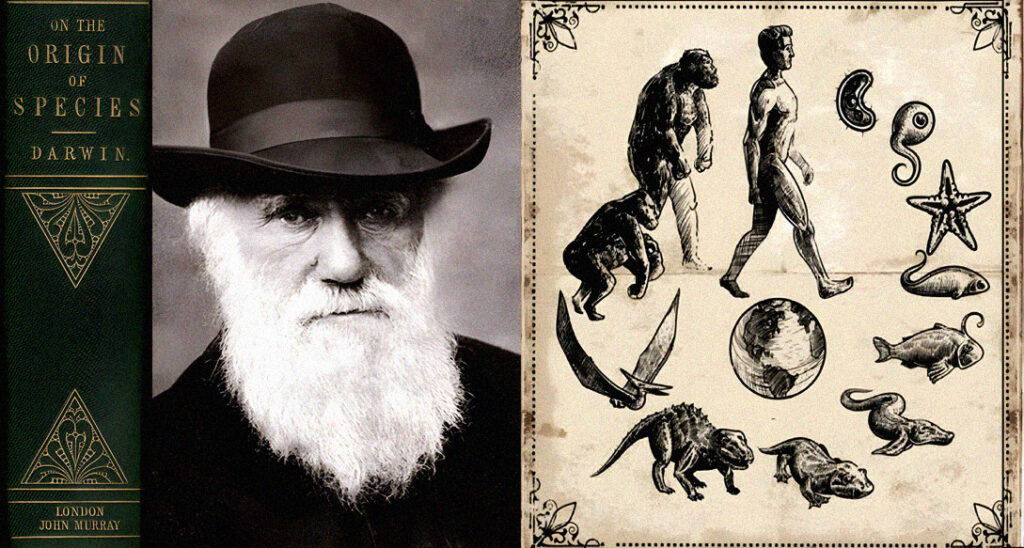
The most common intellectual “challenge” to the Biblical account of creation is the theory of evolution. While the Theory of Evolution by Natural Selection does not directly disprove the existence of God, evolution plays a “perceived” role in challenging specific, often fundamentalist interpretations of God.
Evolutionary Viewpoint
The evolutionary argument is that the diversity and complexity of all life can be explained by natural processes — such as mutation, genetic variation, and natural selection — acting over vast periods of time, as first proposed by Charles Darwin.
The theory of evolution falls into two broad categories — microevolution and macroevolution.
- Microevolution refers to small-scale changes in the genetic makeup of a population over relatively “short” periods, typically observed as shifts in traits such as size, colour, or resistance. Microevolution leads to changes within a species, rather than the creation of entirely new species [1].
- Macroevolution refers to large-scale evolutionary changes that occur over long periods, often resulting in the formation of new species or major groups of organisms [2]. The theory of Macroevolution posits that all life on earth descended from a single-celled, common ancestor often called LUCA (Last Universal Common Ancestor), which lived roughly 3.5 to 4.2 billion years ago. This simple organism eventually diversified into bacteria, archaea, and eukaryotes (humans, animals, plants, and fungi) [3].
The following video provides a brief visual overview of macroevolution. Although this website supports the Biblical account of creation, the video is presented to help readers better understand macroevolution and consider whether the theory is logically compelling.
Creationist Viewpoint
Many proponents of creationism and intelligent design contend that the theory of evolution is fundamentally flawed, arguing that it lacks conclusive evidence and relies on unsustainable leaps of logic.
Their critiques often focus on perceived gaps in the fossil record and the argument that certain complex biological structures cannot be adequately explained by undirected evolutionary mechanisms. Further discussion of evolutionary theory and these critiques will be presented in the following sections.
Intelligent Design – Complexity that Defies Evolutionary Theory
Definition of Intelligent Design
Intelligent design (ID) is the theory that certain complex features of the universe and of living things are best explained by an intelligent cause, rather than through undirected evolutionary processes or chance. The “intelligent cause” is commonly understood to be God [1-3]
ATP Synthase – Molecular Machine
ATP Synthase is an often cited example of intelligent design. It is a tiny enzyme molecular machine found in human cells and virtually all known forms of life. It produces Adenosine Triphosphate (ATP), the primary energy “currency” of life [1]. The ATP Synthase process occurs in approximately 90–95% of the body’s 30–40 trillion cells [2].
The following video provides a brief overview of the ATP Synthase. When viewing the video, take note of the rotating shaft and protruding lobe that function much like a mechanical engine camshaft, precisely opening and closing the protein subunits. Consider whether it seems plausible that random evolutionary mutations (and natural selection) could engineer such a system.
ATP Synthase consists of two distinct, coupled, fully reversible rotary motors that can spin at rates of 6,000–42,000 rpm. They are connected by a central axle and a bump-like structure (lobe) that functions like an engine camshaft — perfectly positioned and synchronized to regulate the opening and closing of its protein subunits.
There is virtually no scientific debate that ATP Synthase is considered a biological nanomachine. Researchers use “nanomachine” as a technical descriptor because ATP synthase has distinct biomechanical parts — including a rotor, a stator, and a drive shaft that convert chemical energy into mechanical rotation (and vice versa) with nearly 100% efficiency. Researchers in nanotechnology often use ATP synthase as a base model for designing synthetic molecular motors that could one day be used in medicine.
DNA Damage Response
The human body makes a staggering number of DNA repairs every day to maintain genomic integrity. Estimates suggest that each cell experiences between 10,000 and 1,000,000 DNA lesions (damage or errors) daily. Given that the human body contains roughly 30 trillion cells, this amounts to hundreds of quadrillions to tens of quintillions of DNA repair events each day.
The following TED-Ed video provides an overview of the astounding human DNA Damage Response (DDR) system. As you watch the video, note how the DNA Damage Response identifies and assesses the specific type of lesion (DNA damage) to select the appropriate repair mechanism from five different specialized repair pathways.
While scientific consensus stops short of saying DNA repair in humans contains “innate” logic, ample research supports the idea that DNA Damage Response mechanisms are not merely random biochemical interactions; they function as an organized system, sometimes described as biological logic circuits that detect damage, evaluate the damage type, select the appropriate repair pathway, or initiate apoptosis (controlled cell death) if the damage is beyond repair.
Seeing, Hearing, Tasting, Smelling, and Touching are Believing
The human body is, by any definition, a marvel of engineering, nowhere more evident than in the five senses. As you watch the following brief video, consider whether a rational argument can be made that random mutations (genetic errors), together with natural selection, are capable of producing the remarkable complexity demonstrated. The delicate, precise, and intricately articulated arrangement and function of the three ossicles (bones) of the middle ear alone seem to provide virtually irrefutable evidence for intelligent design.
Random Mutations + Natural Selection ≠ Engineered Systems
Regarding the (supposed) evolution of ATP Synthase, DNA Damage Response and human physiology, ChatGPT states:
Start of answer: “Modern biology explains that systems like ATP synthase and the DNA damage response arose through cumulative evolution, where random genetic variation was filtered by natural selection, progressively co-opting and refining simpler components into integrated, highly efficient molecular systems.” – End of answer.
When asked to define “random mutations”, ChatGPT replied:
Start of answer: “Random mutations are unpredictable changes in the DNA sequence that arise primarily from errors during DNA replication or from environmental influences such as radiation or chemical exposure. They are considered random because they do not occur in response to an organism’s needs and are not directed toward improving fitness; instead, they occur without regard to whether their effects will be beneficial, neutral, or harmful.“ – End of answer.
While one can appreciate the challenge that “modern science” faces in formulating theories for the existence of ATP Synthase, DNA Damage Response and human physiology, the notion that these astoundingly intricate, engineered and synchronized machines and systems originated from a culmination of multiple undirected random genetic mutations (DNA errors) seems astronomically implausible.

Tornado in a Junkyard
Proponents of intelligent design sometimes use a metaphor that states, random mutations and natural selection can no more engineer complex systems than a tornado in a junkyard can build a jet.
In addressing this idea, ChatGPT states:
Start of answer: “The classic tornado in a junkyard metaphor is misleading. A more accurate statement would be: Evolution is like a vast junkyard constantly generating random parts (mutations), but with a non-random process (natural selection) that keeps any piece that happens to work and fits, gradually assembling functional systems over time.” – End of answer
This begs the question: How did random mutations “generate” highly functioning, seemingly engineered working components? In the case of ATP synthase, these include but are not limited to:
The c-ring rotor, which acts like a spinning wheel or turbine, turning as protons flow through it.
The central stalk (γ subunit) functions like a drive shaft, transmitting rotation from the rotor to the catalytic region.
The F₀ proton channel behaves like an energy inlet or nozzle, guiding proton flow in a way similar to fluid driving a turbine.
The F₁ catalytic head works like a set of mechanical pistons or cams, changing shape in cycles to produce ATP.
The stator (peripheral stalk) acts like a frame or support structure, holding parts of the enzyme still while the rotor spins.
Furthermore, how did undirected evolutionary forces engineer and assemble these parts together? While one can make the case for microevolution* (small-scale changes within a species, such as dark-colored moths surviving better than light-colored moths), it is an entirely different matter to propose that undirected, untargeted evolutionary forces could create complex nanomachines such as ATP synthase, “logic”-driven DNA repair mechanisms, or the intricate components of human physiology.
Overwhelming Evidence
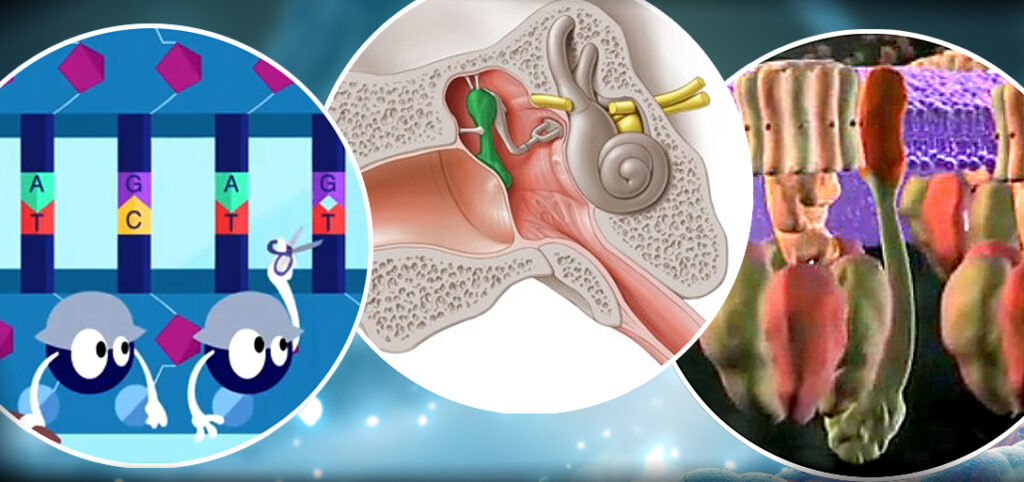
ATP Synthase, DNA Damage Response and human physiology provide overwhelming evidence for intelligent design. They represent just some of the astonishing processes at work within our bodies. When ChatGPT was asked, “How did evolution know it got it right with the human body?” the response was:
Start of Answer: “So it’s not about perfection—it’s about ”good enough to survive and reproduce.
Why the human body isn’t “perfect.
If evolution were aiming for perfection, we wouldn’t have things like:
-Back pain (our spine adapted from four-legged ancestors)
-Wisdom teeth issues (jaws got smaller, teeth didn’t fully keep up)
-A blind spot in our eyes (due to how the retina is wired)
These are signs of a patched-together system, not a perfectly engineered one.
A better way to think about it
Evolution is less like an engineer designing from scratch and more like:
-A tinkerer modifying what already exists
-Keeping what works well enough
-Never starting over from zero.” – End of Answer
Interestingly, the answer provided states that humans are a “patched-together system.” It further says that evolution is like a “tinkerer… keeping what works well enough“. It leads one to wonder why humans, animals and so much of the natural world are strikingly beautiful. If evolution were like a “tinkerer,” wouldn’t the results of random variations and mutations resemble the mutant toys in Toy Story, bizarre science fiction aliens or the gruesome orcs in Lord of the Rings — perhaps functional, but rarely beautiful?

As mentioned in the preface, it is not surprising that modern science seeks naturalistic explanations for even the most astounding mysteries of life, seeing as science operates within the framework of the “natural”, which precludes the realm of the supernatural or divine. Nevertheless, some prominent thinkers have come to believe that the evidence points beyond a purely naturalistic explanation. One of the most notable examples is Antony Flew.
Following the Evidence
Antony Flew
Antony Flew (1923–2010), a prominent British philosopher and leading advocate of atheism for over five decades, stunned the scientific world in 2004 when he announced a dramatic shift in his position, embracing a form of deism. Deism is the belief that a supreme, transcendent being is the ultimate source or creator of the universe and that religious knowledge can be grounded primarily in reason, observation, and the study of nature, rather than in divine revelation, sacred texts, or ecclesiastical authority. Deists generally emphasize natural religion—the idea that human beings can arrive at certain conclusions about God through the exercise of reason and reflection on the natural world [1-3].
Flew had previously argued that one should presuppose atheism until empirical evidence suggesting the existence of a God surfaced [4]. When his position changed, he acknowledged the existence of an intelligent designer. He became convinced that the staggering complexity of life — particularly the information encoded in DNA, could not be explained by random naturalistic processes. He maintained that he was “following the evidence” where it led, a principle he often cited.
Before continuing to ‘Rational and Intellectual Arguments Supporting God’s Existence — Part Two,’ consider the following.
The Good News of Design
ATP Synthase, DNA Repair Response and human physiology provide exceptionally compelling evidence for Intelligent design and, consequently, God’s existence. For those investigating the Christian faith, this is good news. If the complexity of life reflects intentional design, then human existence is not accidental but purposeful. This means each person has inherent value, grounded in the creator’s intent. It also suggests the universe is ordered and meaningful rather than chaotic or the result of chance.
“For in him all things were created: things in heaven and on earth, visible and invisible, …all things have been created through him and for him. He is before all things, and in him all things hold together.” (Colossians 1:16-17)
“How many are your works, LORD! In wisdom you made them all; the earth is full of your creatures.” (Psalm 104:24)
“For you (God) created my inmost being; you knit me together in my mother’s womb. I praise you because I am fearfully and wonderfully made; your works are wonderful, I know that full well.” (Psalm 139:13-14)
Transcendent and Immanent

The evidence of intelligent design points to a Creator of immeasurable wisdom, power, and authority — the supreme Architect of life and the cosmos. Yet the Bible reveals that this same God is not distant or detached from His creation. Though He stands infinitely above the universe, outside of time, in majesty and sovereignty, He is also near, personally involved, and compassionate toward those who seek Him.
“The Lord is near to all who call on him, to all who call on him in truth.” (Psalm 145:18)
“The Lord is close to the brokenhearted and saves those who are crushed in spirit.” (Psalm 34:18)
“For this is what the high and exalted One says — he who lives forever, whose name is holy: “I live in a high and holy place, but also with the one who is contrite and lowly in spirit, to revive the spirit of the lowly and to revive the heart of the contrite.” (Isaiah 57:15)
Scripture and theological study define this reality in terms of transcendence and immanence. Transcendence emphasizes God’s infinite power and holiness, while immanence reveals a personal God who dwells within the world. Furthermore, unlike the world’s most powerful leaders or influential figures, who often live behind gates and are inaccessible, God is portrayed as readily approachable — welcoming anyone who seeks Him.
“Therefore, since we have a great high priest who has ascended into heaven, Jesus the Son of God, let us hold firmly to the faith we profess. For we do not have a high priest who is unable to empathize with our weaknesses, but we have one who has been tempted in every way, just as we are — yet he did not sin. Let us then approach God’s throne of grace with confidence, so that we may receive mercy and find grace to help us in our time of need.” (Hebrews 4: 14-16)
Rational and Intellectual Arguments – Part Two

To continue exploring rational and intellectual arguments supporting the existence of God, please click the link below: “Rational and Intellectual Arguments – Part Two“. Presented there is further compelling evidence for the existence of God, drawing from cosmology, physics, analytic philosophy, metaphysics (causality, being, and time), moral philosophy, and environmental science.
Alternatively, you may wish to visit the page “God’s Nature,” which provides an overview of God’s character and attributes as revealed through the Holy Bible and theological study.